
Torsten Ruether, the writer and director behind boxing drama Uppercut, reflects on the journey of transforming his modest German indie, Leberhaken, into an international production anchored by veteran actor Ving Rhames.
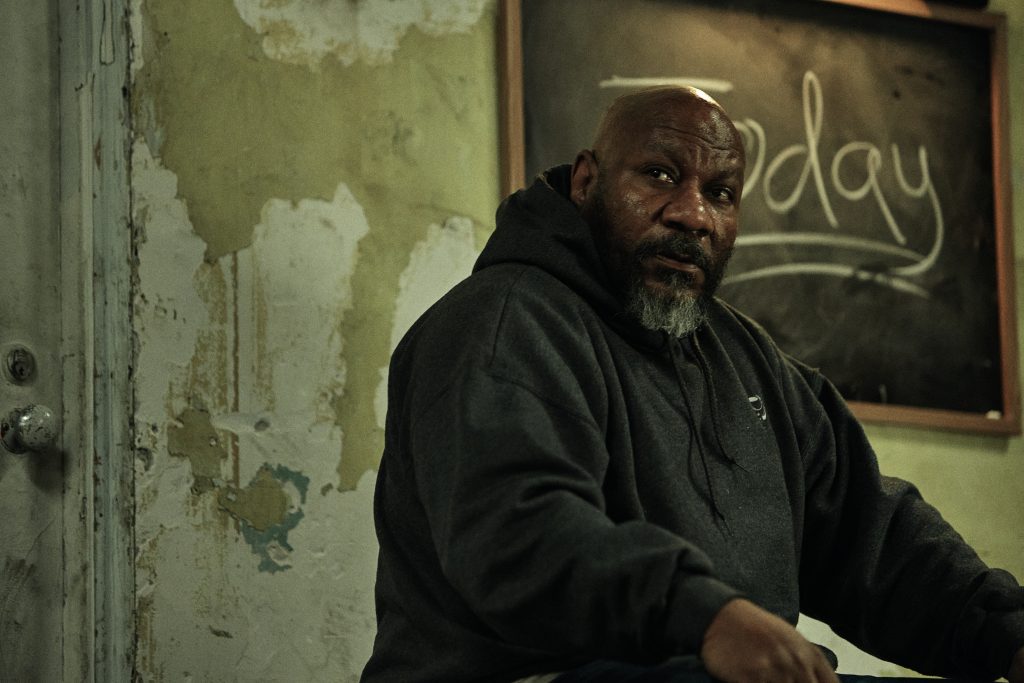
The film centres on a young woman, Toni (Luise Großmann), as she enters the world of boxing and forms an unlikely relationship with Elliott (Rhames), a worn-down former champion who agrees to train her. Across timelines, Uppercut traces Toni’s journey from aspiring fighter to influential sports figure, and explores themes of resilience, transformation, and understanding against the pressure-filled environment of a boxing gym.
In conversation with Outtake Magazine, Torsten Ruether delves into the creative challenges of expanding the film’s scope without losing its emotional core, and using the framework of a boxing story not for sporting spectacle, but something far more introspective and universal.
Uppercut originated as your German film Leberhaken. Can you walk us through how the idea evolved from that original story into this international remake? What core elements did you most want to preserve?
Torsten Ruether: Yes, Uppercut actually started as a very small German independent film titled Leberhaken. In 2021, it premiered as the opening film of the Oldenburg International Film Festival. Oldenburg has a longstanding partnership with The Hollywood Reporter, so there were quite a few U.S. producers in attendance. After the screening, several of them approached us and said they felt the core of the story could resonate strongly with an American audience if we carefully reimagined certain elements.
At first, we thought it was simply a very kind compliment. But those conversations didn’t stop after the festival. People kept reaching out, and gradually the idea of adapting the film for the U.S. market became something very real. From the beginning, our goal was to preserve the emotional intensity of the original. The story lives inside that slightly claustrophobic world of a boxing gym, a place where characters can’t really hide from each other. That intimacy was essential to keep. What changed was the cultural framing around it. By moving the story to Bushwick, Brooklyn, we were able to explore new tensions, particularly the dynamic between a second- or third-generation German immigrant and an ageing, wounded boxing trainer who carries his own history and regrets.
That added a new layer to the material while still protecting the DNA of the original film. In a way, the challenge was finding that balance, keeping the spirit of the first film while opening the story up for an international audience. And of course, once that vision became clear, the next step was to find a truly iconic American actor who could embody Elliott, the trainer at the centre of the story.
You’ve mentioned the original was almost like a chamber play. What were the biggest storytelling and structural challenges you faced pushing past these limits?
Torsten Ruether: For me, the soul of a story is always the essential element, whether you’re telling it as a small, intimate chamber piece or as a large-scale studio film. If that soul disappears, a movie quickly turns into little more than a sequence of effects. So, when we expanded the world of the original film, the real challenge was making sure we didn’t lose that intimacy. In fact, we wanted to push it even further.
The two central characters in Uppercut come from worlds that are far apart, culturally, generationally, and emotionally. They are the kind of people who, in real life, would probably never even speak to each other. That tension fascinated me. We live in a time where curiosity about one another has become surprisingly fragile. People are very quick to label or dismiss each other. I wanted to explore the opposite: what happens when two individuals who seem completely incompatible are forced into a space where they actually have to confront each other. And not in a sentimental way; the obstacles between them are real, and sometimes they even feel impossible to overcome.
At the same time, expanding the story allowed us to introduce a second layer. Toni’s journey doesn’t unfold in the conventional fighter’s arc. Her encounter with Elliott in that boxing gym pushes her toward a completely different path toward leadership and strategy. New York felt like the perfect place for that transformation. It’s one of the few cities in the world where these kinds of reinventions still feel possible. In the end, the goal was simple: open up the world of the film while protecting the emotional DNA that gave the original story its soul.
The timeline structure and transitions are a significant part of the film. How did you decide to interweave past and present, and what do you feel that dual structure brings?
Torsten Ruether: The dual timeline came from a simple question: how do certain encounters shape the course of a life? When we meet Toni in the present, she’s a confident businesswoman operating in the world of boxing — a space that is still largely dominated by men. But the film slowly reveals that the roots of that strength lie years earlier, in the time she spent with Elliott inside that small boxing gym. By interweaving past and present, the audience can experience that transformation almost like a discovery. You begin to understand how moments that might feel small or even painful at the time can later define who we become. I think many of us have had that experience. When you look back eight or ten years and realise that the person you are today wasn’t necessarily the person you imagined you would become.
Life rarely moves in a straight line. The dual structure allowed us to capture that idea cinematically. It shows how Toni’s path shifts after a difficult and formative experience, ultimately leading her to claim a position of authority in a world that doesn’t easily offer that kind of space. And again, New York felt like the perfect environment for that journey. It’s a city built on reinvention. People arrive with one idea of their future and often end up discovering something entirely different.
You’ve described one core theme of Uppercut as curiosity and getting past surface impressions. In what ways did you hope audiences would reflect on that theme after watching your film?
Torsten Ruether: I’ve always been fascinated by the idea that the first thing we see when we meet someone we don’t know is usually a façade. It’s the surface people present to the world. But the truly interesting things about a person, their experiences, their fears, sometimes even their wounds, almost always live beneath that surface. What interested me in Uppercut was the process of moving past that first impression. Not in a calculated way, but through encounters that gradually allow two people to see each other more clearly. The relationship between the two main characters is built on exactly that experience. At the beginning they mainly see the surface, the stereotypes, the assumptions. But over time, they start discovering the person behind it. And often those discoveries happen in moments that neither of them expected.
If the film encourages audiences to approach people with a little more curiosity and a little less certainty about their first impressions, I would be very happy. Because I think that willingness to look beyond the surface is something we’ve slowly started to lose, and yet it’s essential if we want to understand each other on a deeper level.
The dynamic between Elliott and Toni is central. How did you approach developing their trust on screen, and did that relationship evolve during shooting in ways you hadn’t fully anticipated?
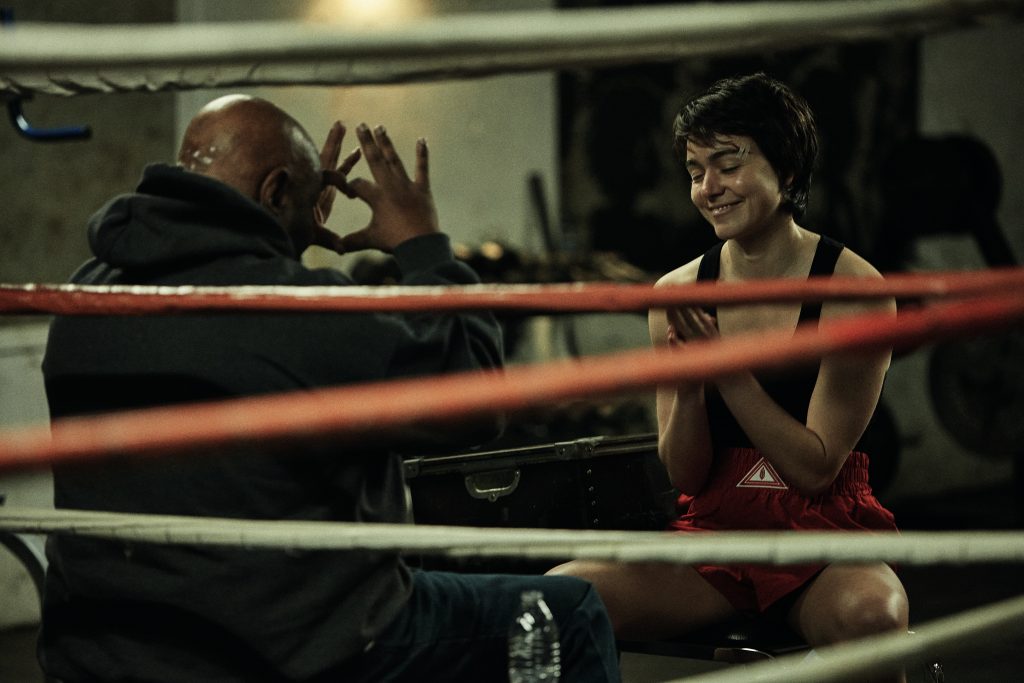
Torsten Ruether: What fascinated me was that the relationship between Elliott and Toni started to mirror the relationship between the two actors themselves. In many ways, Ving Rhames and Luiii approached each other with the same curiosity that their characters slowly develop in the film. And the key element in all of it was trust. We began to sense that very early during rehearsals. We spent about a week together before shooting, sitting down with the script, reading it again and again, exploring the nuances. But what struck me even more was what happened outside the readings. The two of them would immediately fall into long conversations, asking each other about their lives, their experiences, their worlds.
By the second day it became clear to me that something special was happening. They had a genuine curiosity about one another, and that’s something you can’t really manufacture as a director. During the shoot, that connection kept growing. The trust between them deepened, and at a certain point the line between actor and character almost started to blur. Their scenes began to feel very instinctive, very alive. For a director, that’s the most beautiful moment when the emotional truth between two actors starts feeding directly into the story.
What about Ving Rhames and Luise “Luiii” Grossmann made you confident they could carry this nuanced story?
Torsten Ruether: With Ving Rhames, the confidence came almost instantly. Elliott is a character who carries a lot of emotional history. Wisdom, disappointment, resilience. Ving has a natural gravitas that brings exactly that kind of complexity to the screen. To be honest, when we first sent the script to his management, it was more of a hopeful attempt than a real expectation. We simply wanted to try. None of us seriously believed that someone of Ving’s stature would actually consider the project. So, when the message came back that he had read the script and wanted to do it, it was an incredible moment for all of us. What became clear very quickly was how personally he connected with the character of Elliott. You could feel that the story spoke to him on a deeper level, and once that happened, there was never any doubt that he could carry the emotional centre of the film.
With Luiii it was a different kind of confidence. She had already played the original version of the character in Leberhaken, and we were very interested in letting that character evolve further in the international version. Toni became more instinctive, more unpredictable. Someone who enters Elliott’s world with a kind of raw energy. That contrast between the two characters was exactly what we were looking for. And what was beautiful to watch was how much Ving appreciated working with her. Their collaboration developed very naturally, with a lot of mutual respect. In fact, he was so impressed by her that she is now represented in the U.S. by his own management team. In a way, the story we were telling in the film — two very different worlds coming together — ended up happening behind the camera as well.
In interviews, it was noted that actors were given room for spontaneity, especially in the long takes. How did that balance between scripted and improvised moments shape the final performances?
Torsten Ruether: I was actually very happy about those moments of improvisation, because they showed how willing both actors were to trust their instincts. That kind of courage is incredibly valuable on set. What impressed me most was that their improvisations always respected the emotional circle of the scene. They might step away from the exact wording for a moment, but they always returned to the original tone and intention of the script. So, the improvisation was never a self-indulgent exercise; it became a way of deepening the emotional truth of the story. For us as filmmakers, that was a real gift in the editing room. Sometimes those spontaneous moments offered something even more authentic than what was written, which allowed us to slightly reshape certain scenes or replace a scripted beat with something more organic.
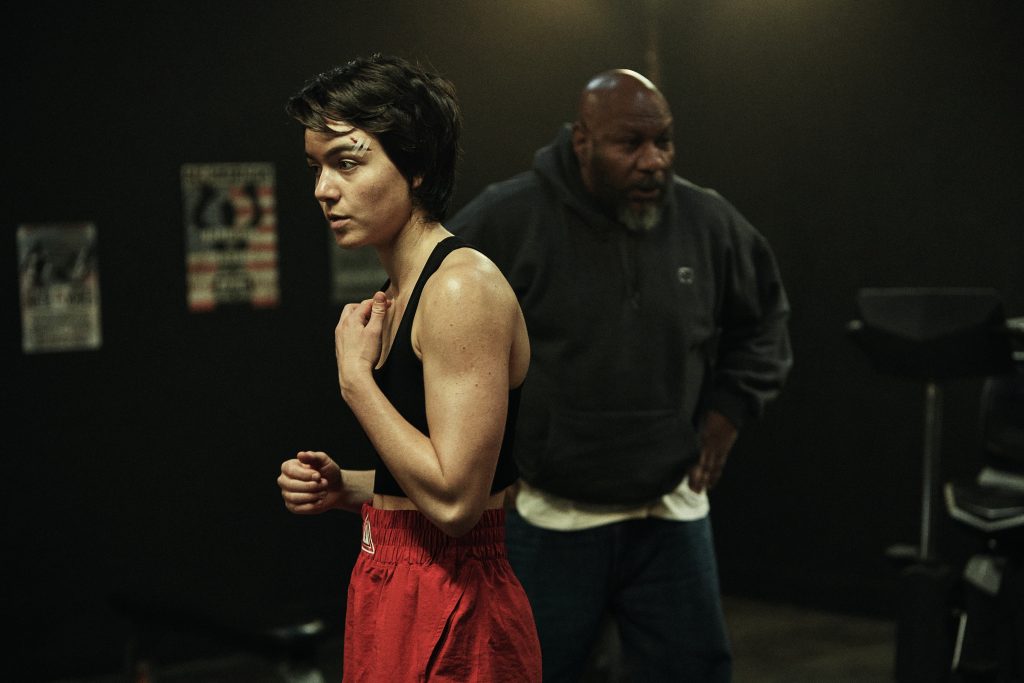
It also required a lot of trust from the entire crew. Our camera team followed the actors with two moving cameras, constantly adapting to where the performances were going. Everyone had to stay alert and move with that energy. And when that kind of trust works, it creates very special moments. The long boxing training sequence — which ran close to fourteen minutes — eventually stopped feeling like a staged scene. At some point, it simply felt like we were witnessing a real training session inside a real gym.
Blues music and specific songs like “Turn Me Wild” are woven into the narrative. How did you select the soundtrack, and what role does music play in shaping Toni’s emotional journey?
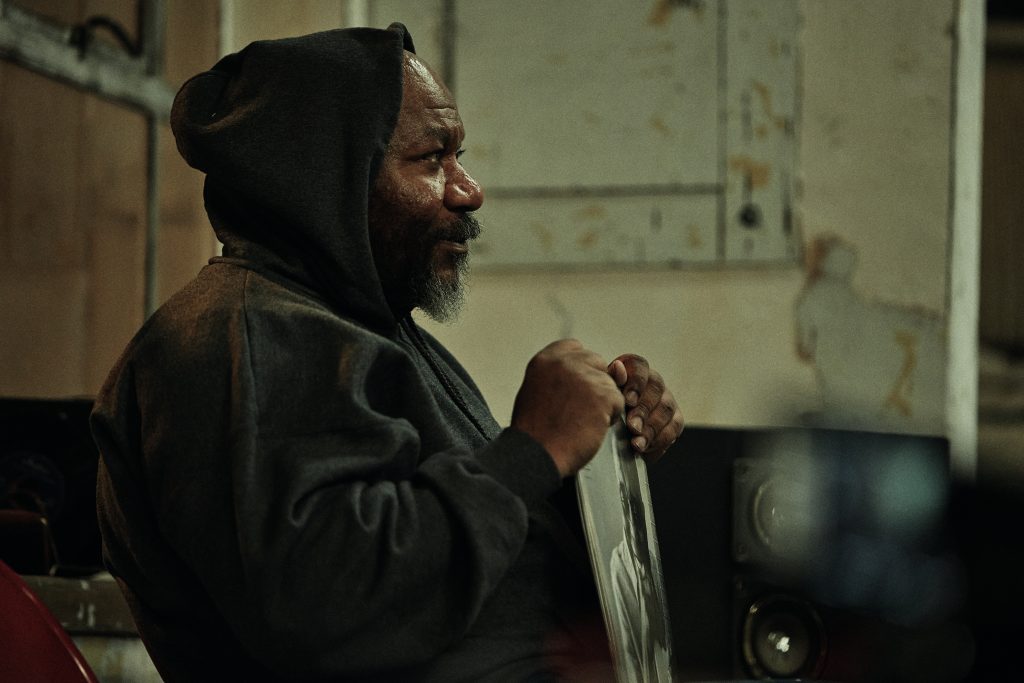
Torsten Ruether: I loved the idea that a boxing coach would be deeply connected to blues music, and that this music would shape the emotional atmosphere of the gym. Blues carries a very specific spirit, struggle, resilience, but also gratitude, and that felt very true to Elliott as a character. For Toni, however, that world is completely foreign. It doesn’t belong to her generation at all. And that contrast interested me. Through Elliott and through the time she spends in the gym, she slowly discovers this music and the emotional landscape behind it. At one point, that even leads to the boxing–blues dance moment, which becomes an important turning point in their relationship. It’s the moment where Elliott suddenly begins to see Toni in a different light.
Buddy Guy was central to that idea from the very beginning. I had read several interviews with him where he speaks about gratitude and about appreciating life even when it’s difficult. That philosophy felt very close to the emotional core of the film, which is why songs like “Turn Me Wild” and “Back Up Mama” became such important elements for us. At the same time, we worked with the incredible ensemble Brass Against, who stepped into a completely new musical territory for this project and created a powerful score. So, the soundtrack itself became a kind of cultural collision, classic blues on one side and a more contemporary, almost rebellious energy on the other. And in many ways that musical clash mirrors the story itself: two very different worlds meeting and gradually discovering a shared rhythm.
The production intersected with both writer and actor strikes. How did you navigate these in the making of Uppercut?
Torsten Ruether: In filmmaking, you quickly learn that nothing is ever guaranteed. You might go to bed believing you know exactly how the next day will unfold and, by the morning, the entire situation has changed. During the strike period that reality was simply amplified. At times, the production felt like navigating an obstacle course. Every day brought a new challenge. After our first shooting block with Ving Rhames, the strikes forced us into a pause of almost six months before we could continue filming in New York with Jordan E. Cooper and Joanna Cassidy. During that time, the production was essentially on hold. Some investors stepped away, new partners came in, and the entire project had to constantly adjust to the circumstances. Eventually, we were able to secure a waiver in New York that allowed us to move forward again. There were definitely moments when we honestly didn’t know how the film would continue. But somehow it always did. Looking back, that persistence feels strangely connected to the spirit of the story itself. Uppercut is about endurance. About continuing even when the path forward isn’t entirely clear. And in many ways, the production ended up living through that same experience.
Shooting a story that bridges German origins and an English-language context must have had unique challenges. How did you navigate these cultural nuances?
Torsten Ruether: It certainly could have been a challenge, but interestingly, I never really approached it as a cultural problem. For me the story was always about people first. From the beginning, we worked with an extraordinary American team, and apart from Luiii, I was essentially the only European on set. Because of that, any cultural boundaries disappeared very quickly. What mattered much more was that everyone shared the same commitment to the story. The script itself became a very collaborative process. We kept refining it together, adjusting dialogue, sharpening moments, making sure the emotional truth of each scene felt authentic. Ving Rhames brought his perspective, and Jordan E. Cooper — who is also an exceptional writer — contributed a lot of thoughtful ideas.
So instead of feeling a cultural gap, it felt like a group of people pulling in the same direction, each bringing their own experiences into the story. And in the end that was really the goal: to tell a story that feels universal. An encounter between two people that could just as easily take place in New York as in Buenos Aires, London, Berlin or Sydney. Because at its core, Uppercut isn’t really about cultural differences — it’s about human connection.
Many reviews commented that the film isn’t a traditional sports spectacle. How do you feel about subverting genre expectations, and what do you hope audiences take away, even if they were expecting more conventional boxing drama elements?
Torsten Ruether: I think the reviews are fair in that sense, Uppercut isn’t a traditional sports spectacle. And to some extent that can also be a matter of expectations and how they’re shaped through advertising. So, I completely understand why some audiences might initially expect a more conventional boxing drama. At the same time, I’ve always been interested in exploring slightly different paths within a genre. Boxing films often follow a very familiar structure. The rise, the big fight, the victory or defeat in the ring. Those stories can be wonderful, but with Uppercut, we were more interested in what happens around the ring and between the characters.
In our film, the boxing gym becomes less a stage for spectacle and more a space for personal encounters and transformation. The real conflict is emotional rather than physical. And sometimes cinema benefits from stepping off the main road of a genre. The highway can take you to a destination quickly but occasionally it’s the side roads that lead to the more interesting discoveries. So even if someone comes to the film expecting a more traditional boxing story, I hope they leave with the feeling that they’ve experienced something slightly different. A story about what people carry with them into the ring, and what they discover about themselves along the way.
Given the range of reviews (from praise for performances to critiques around pacing or clarity), how do you process that feedback as a writer-director? Has it influenced how you think about future projects?
Torsten Ruether: We were actually very happy to see how passionately people engaged with the film. From the beginning we knew that Uppercut might be a little polarising, because the story intentionally moves away from some of the expectations people often bring to a boxing film. In a way, that was part of the creative risk. Not to provoke for its own sake, but to create something that invites discussion. And I believe cinema still needs that, films that people talk about, sometimes even disagree about. As a filmmaker, you have to be open to that range of reactions. Some responses will be thoughtful and constructive, others might be more emotional or even quite direct. But if you’re not prepared for that kind of dialogue, this probably isn’t the right profession.
What has been especially rewarding, though, is how strongly many viewers have responded to the performances. We’ve received wonderful messages from people who aren’t necessarily critics or industry professionals but who felt genuinely moved by the story and by the relationship between the characters. And that’s a good reminder that filmmaking is ultimately a very subjective experience. Different audiences connect with different aspects of a film.
For me personally, Uppercut has strengthened my interest in exploring those creative borderlands where genres overlap and expectations shift a little. That doesn’t necessarily mean returning to sports stories right away, but the experience of making this film, especially working with actors like Ving Rhames, will definitely shape the projects I want to pursue next.
And lastly, what did you learn from the making of Uppercut that you’re excited to bring into your next film? Are there themes or formats you’re eager to explore?
Torsten Ruether: If there’s one thing I learned from making Uppercut, it’s that filmmaking requires endurance and strong nerves. Sometimes, also a certain amount of stubbornness. All of that becomes part of the process, especially when you’re navigating the kind of challenges this production faced. But what you receive in return is extraordinary. The creative exchange with a team like this, with people in front of the camera and behind it, gives you an incredible amount of energy. There’s a kind of emotional reward that comes from building something together, and that makes the difficult moments worthwhile. That’s the spirit I’m excited to carry into the next project. We’re currently preparing a new story that will also take place in New York, but it explores a completely different world and a very different tone. What interests me now is seeing how some of the creative lessons from Uppercut, the intensity of characters, the collision of very different personalities, might transform in a new genre. Because in the end, every film teaches you something. The exciting part is discovering how those lessons evolve into the next story.
Uppercut is out on digital platforms now.