
The Dutchman (2025) is the debut narrative feature from director Andre Gaines, best known for his documentary work including The One and Only Dick Gregory and producing credits on projects such as Spike Lee’s Da Sweet Blood of Jesus.
An adaptation of Amiri Baraka’s incendiary 1964 one-act play, Gaines’ The Dutchman expands its claustrophobic two-hander into a full-length psychological thriller. Moonlight’s André Holland stars as Clay, a successful Black New York professional who, on a subway ride home, becomes ensnared in a destabilising game of cat and mouse with a mysterious white woman named Lula (Kate Mara). Zazie Beetz, Aldis Hodge, and Stephen McKinley Henderson round out the cast.
Gaines, from his home in Los Angeles, joined Outtake Magazine for a Zoom interview shortly after The Dutchman received its wide US release.
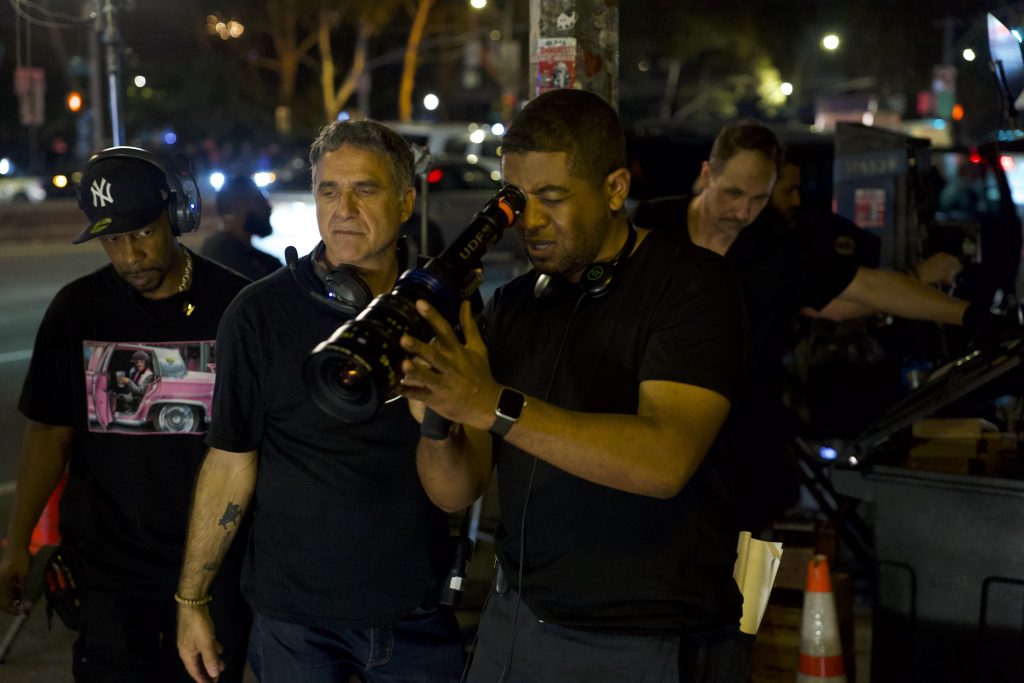
Going into the film completely blind — I think many UK audiences won’t know the original play — is a striking experience. The text, when it was released, was iconic and confrontational. What made you feel this was a story that needed revisiting now?
Andre Gaines: The play was written in 1964 by Leroy Jones, who later changed his name to Amiri Baraka and went on to found the Black Arts Movement. For me it always hit right in the solar plexus. I always wanted to adapt it, but the play is a 55-minute one-act — not a feature film. More than that, I felt the angst Clay experiences is generational, a multi-generational fear. There’s a long history in the US of Black men being falsely accused, particularly when it comes to white women. This play was written right in the heart of the civil rights movement, in a genuinely powder-keg moment. Baraka’s perspective was more pessimistic than mine. I wanted to ask: if he had the chance to rewrite it today, what would he do? That was my approach.
Do you see the film as an extension of the original, or a challenge to it?
Andre Gaines: A little of both, honestly. It’s an extension by virtue of its length and characters — in the play it’s just Clay and Lula on a train, but in the film we meet Clay’s wife, and his friend Warren, who’s only mentioned in passing in the play, is now played by Aldis Hodge. It’s a challenge because I’m taking a more optimistic view of the plight of Black men in America. And it’s an answer, because while history is cyclical, there are paths to avoid its repetition. In the play, Clay loses his life. In the film, he regains not only his life but his marriage. I worked closely with Baraka’s estate — his widow Amina, his son Amiri Baraka Jr. — and they were on board with the direction I wanted to take.
The framing device — Dr Amiri’s narration, the play within a film, the moment Clay sees the original play on a TV screen as he walks past — was fascinating. Can you talk about that?
Andre Gaines: I wanted Clay to experience echoes of the past, and in film, unlike theatre, you can actually visualise those. The moments where Clay experiences these echoes are indicative of what his fate will be if he doesn’t make the right choices. The broader aim was to take Baraka’s work and turn it into a morality play about finding your own identity and coming out clean on the other side. And honestly, it was also just fun — I love meta stories. Adaptation, Last Action Hero, films where something is happening within the world of the film that the audience has also experienced. I’m always drawn to that.
The original play has a younger Black man approached by an older white woman, which creates a particular power dynamic. Your film ages Clay up. Was that a deliberate choice?
Andre Gaines: Partly practical — I called André Holland, and he was simply the perfect person for the role. Kate Mara reached out after reading the script and wanted to play Lula. But also, the age gap was never really the primary power dynamic in the play — it’s so race-focused that race is the power dynamic. In the play, Clay is in his early twenties and Lula in her early thirties, so it’s not a dramatic difference. The power struggle between them still existed, and exists in our film, on the basis of race.
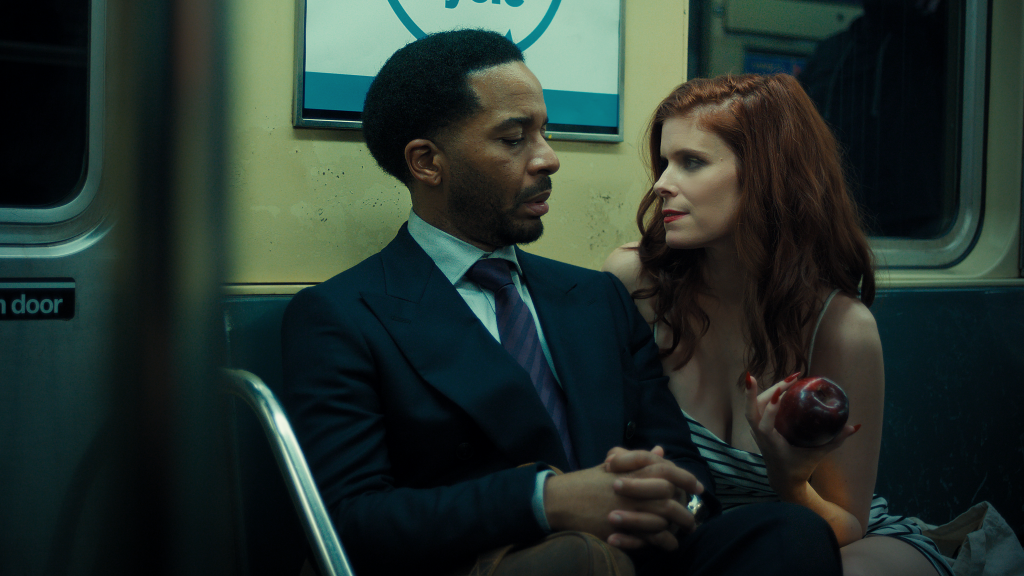
Can you talk about working with André Holland and what he brought to Clay?
Andre Gaines: We actually went to NYU together, so we’ve known each other a long time, though this was the first time we’d worked together. Any Black male actor who’s been to drama school knows The Dutchman — they’ve all had to perform a monologue from it at some point — so André was very familiar with it, which was interesting because Kate Mara was not. With André, we sat down and workshopped the character. Clay in the original is a very passive figure, and I wanted him to be deliberately more active. André felt the same. So it was about bringing aggression, directedness, stick-to-itiveness to the role. With Kate, it was more of a breakout — she’s been on record saying this was the most challenging role she’d ever played, given how incendiary and inflammatory it is. Putting those two dynamic actors together was just a lot of fun to direct.
Why did you want to break the film out of the train and into Clay’s wider world?
Andre Gaines: Both practical necessity and creative instinct — the two are always coexistent in filmmaking, and sometimes in conflict. We couldn’t do the whole thing on a train because it’d be an hour long and, frankly, very static. But practically speaking, that forced the better question: what does Clay’s emotional arc actually look like? I always wanted to know more about who he is. Where did he come from? Why would he allow himself to be put in this situation? How could he unravel it? That’s where the film started.
There are moments that feel like they’re playing out on a biblical scale — particularly in the interaction between Lula and Dr Amiri. Are those two characters meant to be characters at all, or do they represent larger forces?
Andre Gaines: The apple [which Lula eats and offers to Clay] in the original play is already automatically biblical — the forbidden fruit that spells your doom. The symbolism was there from the start. Dr Amiri has a mystical element; he’s allowed to put Clay through this morality play knowing that, at some level, he himself created a dark force from the recesses of his mind. But yes, the film was designed to have a very clear battle of good versus evil.
The name Clay carries obvious allusions to code switching, to moulding yourself into different versions for different situations, but also to the origin story of God creating Adam from clay. How did you want to present Clay’s battle with his own identity?
Andre Gaines: I wanted it to be a little more explicit than it is in the play. Baraka was a poet, and his language is deliberately open to multiple interpretations — and that’s fine, the Q&As and talk backs we’ve had always produce lively debate, because people take very different things away. But for me, the premise was rooted in W.E.B. Du Bois’s theory of double consciousness: the idea that Black people in America have to navigate the white American world while also maintaining honesty to themselves. I put that right at the top of the film. And the way to dramatise it was to give Clay a life outside the train — the therapy session, his conversations with his wife Kaya, his exchange with Warren at the party. In the play, Clay doesn’t get any of that. He just explodes at Lula at the end of the ride. I wanted to take it out of that compressed space so the audience could actually go on that ride with him. You could rename The Dutchman to What’s Wrong with Clay.
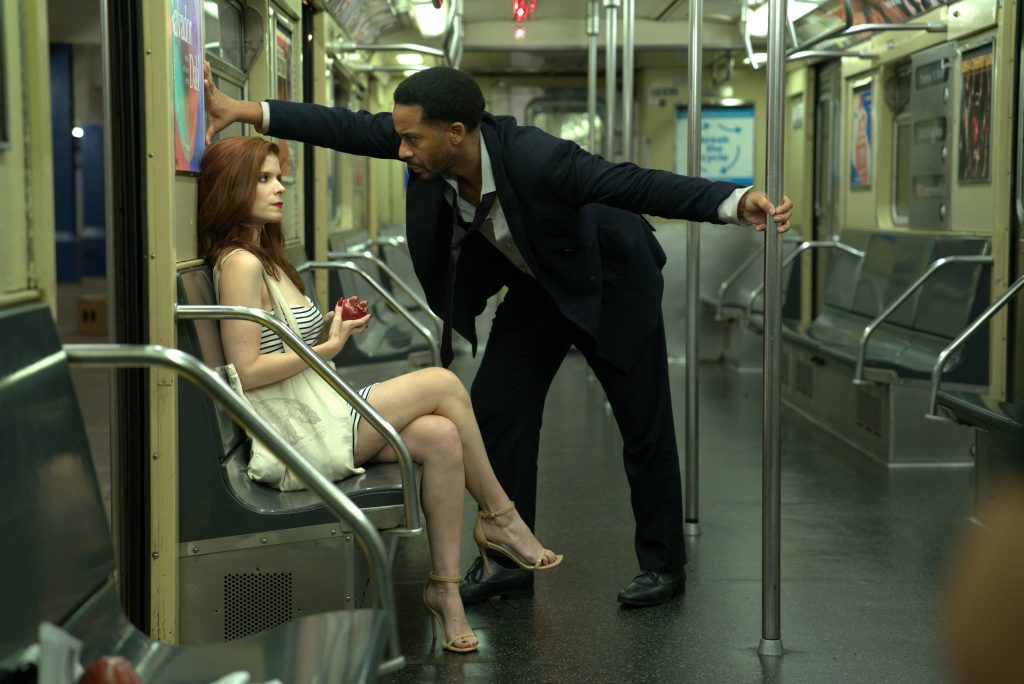
The film deliberately disorients the viewer at times — blurring what’s real and what’s imagined. Was that intentional? Did you want the audience to experience the story rather than simply understand it?
Andre Gaines: Definitely. I wanted the audience to be on edge. The container that made most sense for Clay’s story was the psychological thriller — let’s visualise the results of his psychosis. What’s going on in his head? That became the overarching conceit of the film. Every filmmaker wants you to watch their film more than once, and this one has a lot of Easter eggs, a lot of things hidden in the tapestry. The imagery baked into the play itself was a gift in that sense — in the play, you hear it; in the film, you get to see it.
Now that you’ve released The Dutchman and had audiences react to it, are there questions you’re still sitting with?
Andre Gaines: I have a Freudian relationship with my movies — once I’m done, I never really want to revisit them. Films are never truly finished; they’re just abandoned at a certain point. That said, I know it’s a good film if I can watch it with some degree of pride, and I can. I’m doing a talk and screening at Harvard next month, and I love those events — the Q&As, the lively debates, hearing what people take from it. Black American audiences have been particularly cathartic about it: “I need to watch this again.” And in places like Sweden, someone said, “I have no context for this, but I’m entertained.” Which, fair enough.
What’s next?
Andre Gaines: I can’t say too much yet, but the genre is sci-fi horror thriller — a remake of a Spanish film. It leans into some of the psychological elements I was already working through with The Dutchman, so when that film comes out, you’ll probably see the connection.
The Dutchman is out now.